A precise understanding of account-based marketing fuels the success of brands like DocuSign, Dialpad, and LiveRamp.
These businesses have driven millions in ARR by diverting the focus from spray-and-pray marketing methods to targeting (and landing) bigger, better-fit accounts.
To experience explosive growth, implement an account-based marketing strategy rooted in proven, demonstrable success.
In this article, you’ll learn how to leverage seven success stories to reach and exceed your goals.
TL;DR
- ABM focuses marketing and sales on a defined set of high-value accounts rather than maximizing lead volume.
- Strong ABM programs align sales and marketing around the same target accounts and buying groups.
- Effective campaigns combine multiple channels, such as advertising, email, SDR outreach, personalized content, and direct mail.
- Personalization should reflect the account’s needs, buying stage, industry, or stakeholders—not just insert a company or prospect name.
- Intent and engagement signals help teams prioritize accounts that are actively showing buying behavior.
- Measure ABM using account progression, opportunities, pipeline, revenue, and buying-group engagement rather than relying only on lead metrics.
Table of contents
- TL;DR
- 1. How LiveRamp drove over $50M in annual revenue from 15 target accounts
- 2. How Dialpad used Demandbase’s ABM marketing tools to remove the divide between sales and marketing
- 3. How GumGum uses personalized content to close enterprise B2B companies
- 4. How Auth0’s structured rollout of its ABM programs delivered $3M+ in pipeline
- 5. How DocuSign tripled their homepage conversions with dynamic content
- 6. How Caroo reached 85% of target accounts after a rebrand
- 7. How Workfront leveraged ZoomInfo’s B2B database to grow sales pipeline 90% YoY
- What can you learn from these account-based marketing examples?
What does effective account-based marketing look like in 2026?
Effective ABM aligns marketing and sales around a shared set of target accounts, engages the wider buying group, uses behavioral and intent signals to prioritize activity, and measures progress at the account level.
ABM is now widely used in B2B. 6sense’s Marketing Measurement Benchmark found that 8 in 10 B2B organizations reported having an ABM program. Adoption also increased with deal size: more than 90% of organizations selling solutions worth over $250,000 annually reported using ABM. 6sense
Current research also reinforces that ABM should focus on buying groups rather than individual leads. 6sense found that stronger account-based teams align sales and marketing around selected accounts, collect more buying signals, and track buying groups throughout the purchase journey. Its benchmark found that teams with an ABM practice rated their financial performance about 6% higher than teams without one, although that is an association rather than proof that ABM alone caused the difference.
That makes the examples below useful for more than their individual tactics. The recurring pattern is coordinated account selection, multi-channel engagement, personalization, sales-marketing alignment, and measurement around revenue opportunities.
1. How LiveRamp drove over $50M in annual revenue from 15 target accounts
Effective ABM strategies are selective about the accounts they choose to target. They also use multi-channel content distribution to improve brand awareness and meet prospects where they already are.
Data enablement platform LiveRamp adopted an account-based marketing approach to pursue a targeted list of Fortune 500 companies.
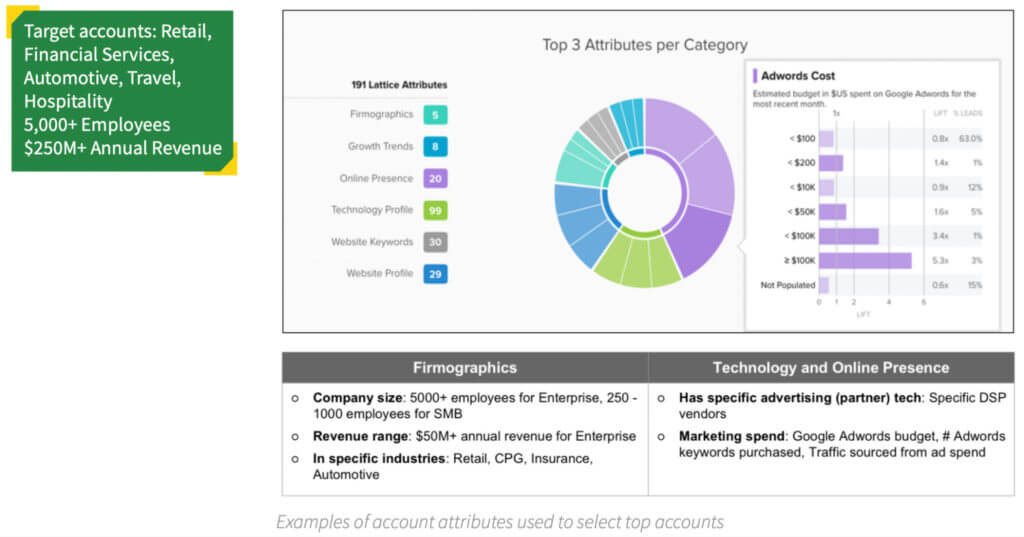
They used the Lattice Predictive Insights Platform (now part of the Dun & Bradstreet group) to gather relevant intelligence on aspects, such as firmographics, online presence, and growth trends. This helped them narrow their search down to a list of 15 best-fit accounts and where to find them.
Account-based marketing can operate one-to-one, one-to-few, or one-to-many. The more personalized the approach, the more resource-intensive it tends to become, which is why high-touch one-to-one ABM is typically reserved for higher-value accounts.In the original Dialpad case study, Demandbase gave salespeople visibility into lead nurturing and marketing activity.
For a reasonable return on investment, target higher-value accounts than you would with more conventional demand generation plays.
LiveRamp identified the attributes that their high-value accounts have in common:
- 5000+ employees for enterprise companies;
- $50M+ in annual revenue;
- Located in retail, CPG, insurance, and automotive industries.
They then built and implemented their account-based multi-touch marketing campaign around those targets.
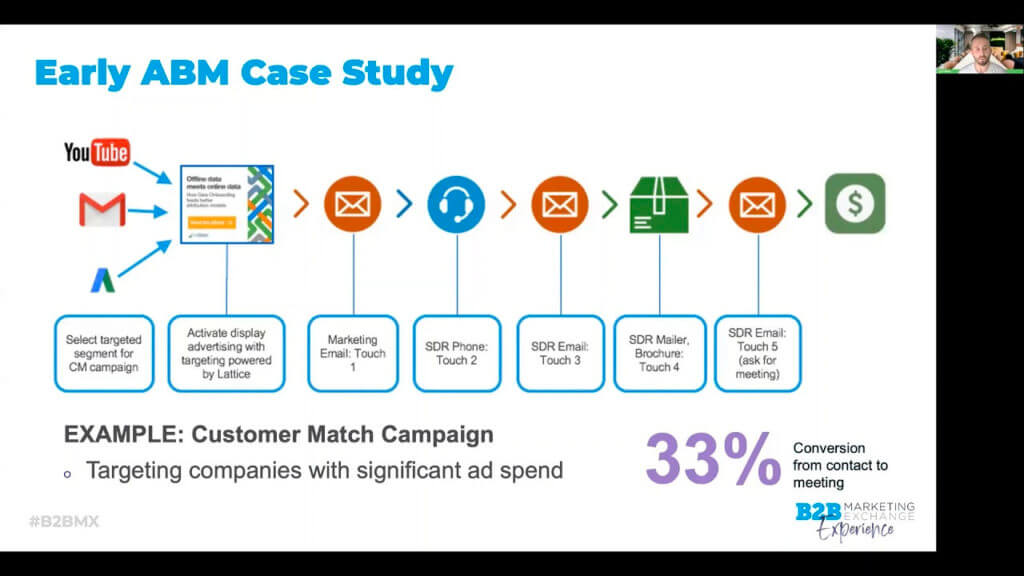
LiveRamp learned they could reach their accounts through a multi-channel sequence, including:
- Display advertising;
- Email marketing;
- Outbound SDR calling;
- Direct mail.
The first two touchpoints (display advertising and a targeted marketing email) introduce the brand, looking to generate awareness before the SDR makes contact.
LiveRamp couldn’t have seen the success they did without total alignment between sales and marketing teams.
Their SDR even sits within the marketing team, so marketing can be involved in direction and incentives that focus on the full spectrum of relationship building, rather than focusing exclusively on booking a meeting.
To mirror LiveRamp’s efforts:
- Define the qualification criteria that describe your ideal account;
- Build and execute a multi-channel ABM strategy;
- Align sales and marketing.
A simple multi-touch ABM cadence might look like this:
Touch 1: Targeted advertising
Based on your understanding of each unique account (whether you’re more likely to reach them on social media or other platforms), run a targeted ad campaign using one of the following:
- Traditional display ads. Banner adverts served on a variety of devices.
- Native ads. Ads strategically placed on relevant websites or platforms that are designed to look like organic content.
- Social ads. Targeted based on demographic, location, or search, and designed to appear as organic content within a social media feed.
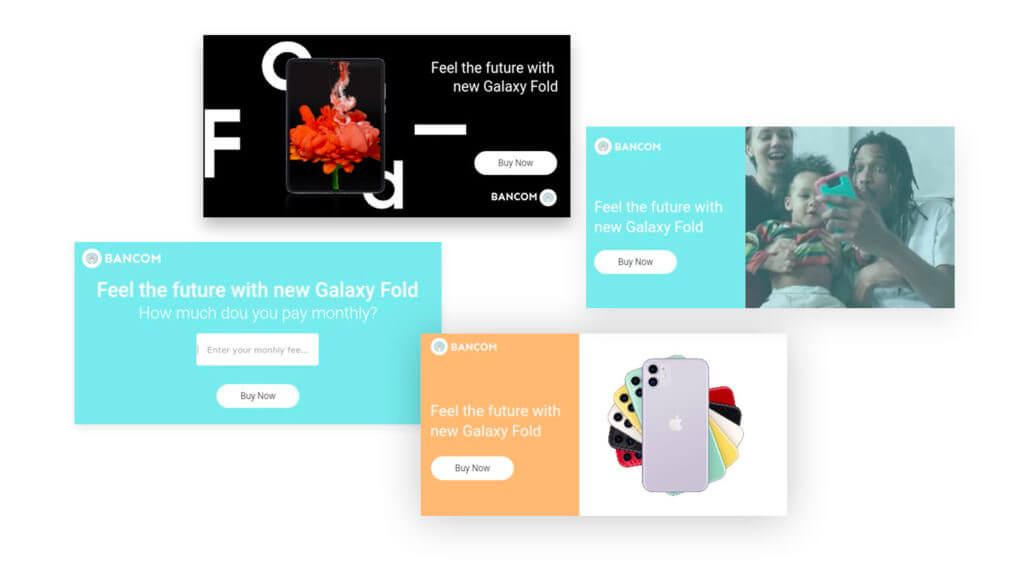
Even a small degree of personalization can capture attention and improve the efficacy of your digital marketing ads. For example, Bannerflow ads for the same phone use different creative appeal to varying audiences:
Touch 2: Lead capture device
Gated lead magnets should offer value that exceeds the value in your free content. Solve customer pain points to build trust, and make sure lead generation content covers bottom-of-funnel topics to lift purchase intent and improve conversion rates.
Take this ebook offer from OptinMonster:
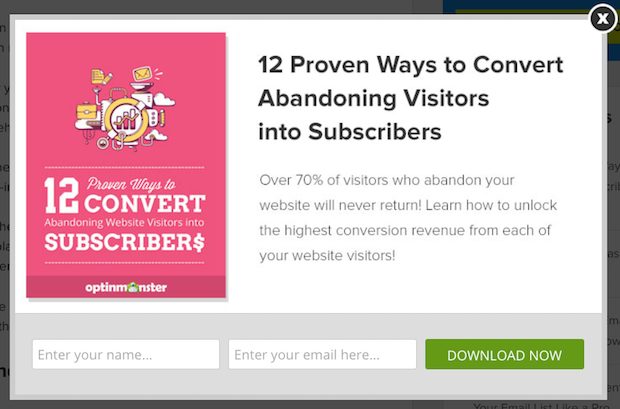
OptinMonster offers website traffic conversion and monetization. This ebook offer is connected directly to that service while addressing that struggle for their audience.
Touch 3: Marketing email
The first email your prospect receives should be contextual.
This type of generic email is ineffective:
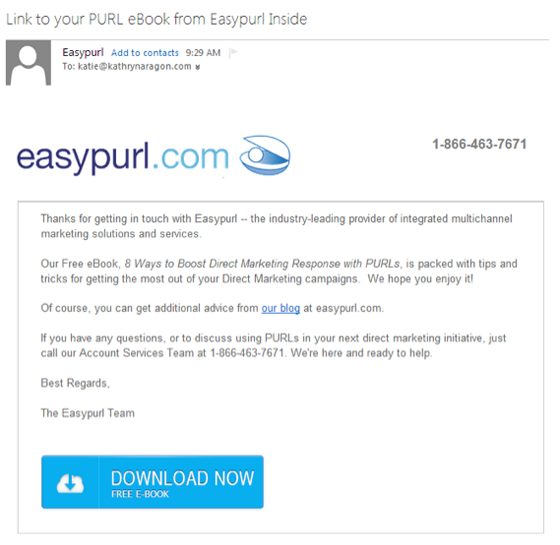
Instead, send emails because of an action your account took. If you track an ebook download, follow up in two days with a question about the guide to spark a conversation.
If, however, your prospect doesn’t download the book, send a different email. Like this one from Charles Ngo:
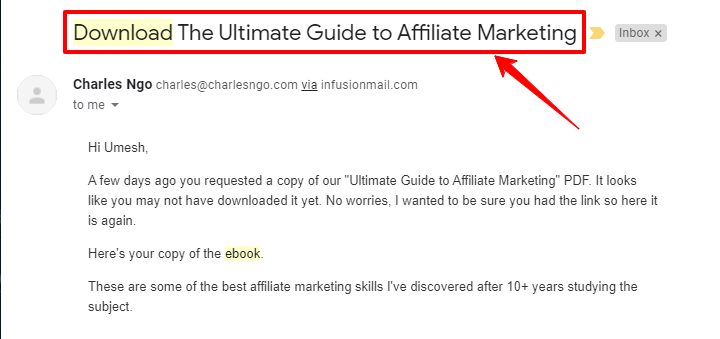
This follow-up email is appropriate and effective because it directly addresses the fact that the reader hasn’t yet downloaded the ebook with a gentle nudge and personalized approach.
Touch 4: SDR’s first phone call
The goal of the first SDR phone touchpoint should be to qualify the account against your ideal customer profile.
If the account matches your personas (whether that’s based on company size, operational processes, or expected deal size), then you can justify cost-intensive ABM approaches (like personalized gifts).
Touch 5: Personalized gift
Personalization is not a pair of socks with your company logo on them. To make an impact, identify personal characteristics, interests, or behaviors of key decision-makers and capitalize on that knowledge.
Take Engagio (now part of Demandbase), who manufactured individual bobblehead models of the relevant leaders at key accounts as part of their ABM strategy.

Supplement customer research with firmographic data (like the kind LiveRamp pulled from Lattice) to build a narrow, targeted list of prospective accounts.
Then, design a multi-touch, multi-channel outreach campaign that meets your target audience where you know they’ll be.
2. How Dialpad used Demandbase’s ABM marketing tools to remove the divide between sales and marketing
Account-based marketing doesn’t just bridge the gap between sales and marketing teams. To execute effectively on your product marketing strategy, marketing and sales need to operate as one unit.
Take Dialpad, an AI-powered cloud communications platform that has integrated both teams to drive ABM success.
“Now that Dialpad’s Marketing and Sales teams share a common view, they have smarter conversations about target accounts… When reps can call a decision-maker based on activities, cold calls become warm calls, and conversions skyrocket.” – Izabella Bray, Head of Marketing Campaigns at Dialpad [via Demandbase]
To achieve this level of synergy, Dialpad partnered with Demandbase, an account-based marketing software platform.
Demandbase gives salespeople full visibility over lead nurturing and marketing activities. When leads cross over the MQL threshold, the platform alerts reps with a summary of that activity, and a series of insights to power up their next sales outreach.
This is not a marketing-to-sales handoff. Marketing stays involved after sales reps engage, supporting with customized content throughout the entire buyer’s journey, such as this personalized landing page.
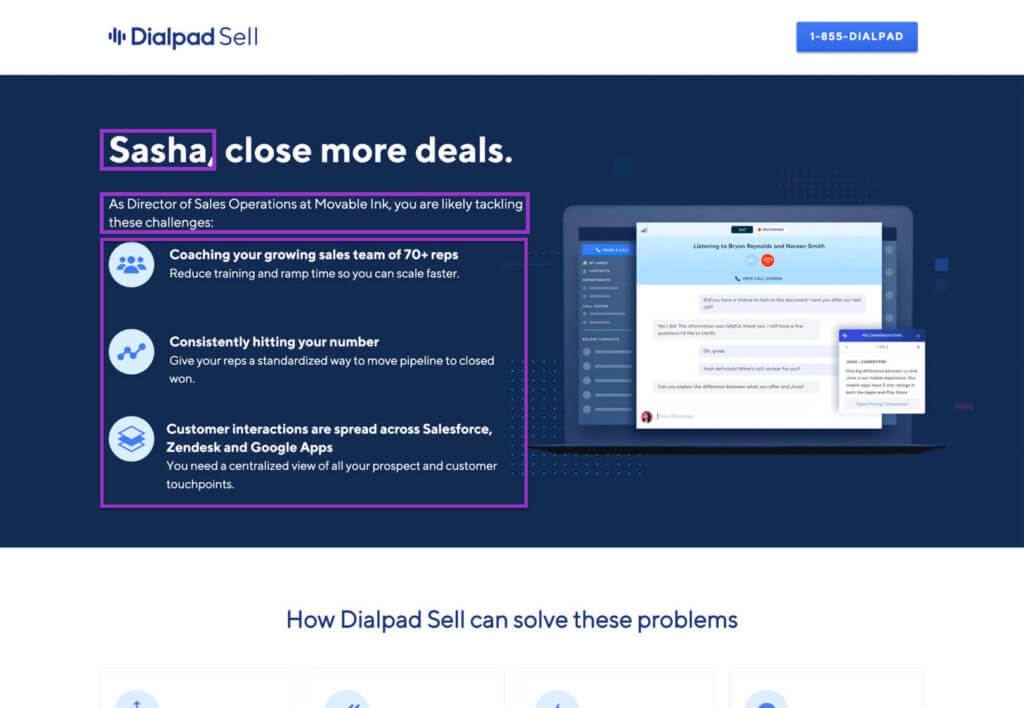
When taking an ABM approach, remove the divide between sales and marketing. Do this by creating Scrum-style squads with individual contributors from each department working together on specified accounts.
A single ABM squad might consist of an SDR, an AE, a content marketer, and a digital advertising specialist.
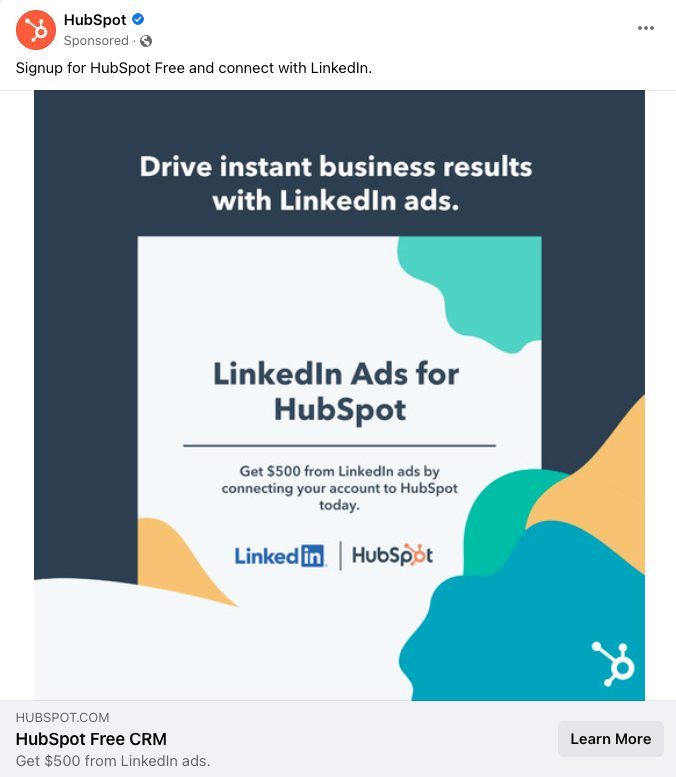
The content marketer would work with the ad specialist to design and place targeted ads such as this sponsored post from HubSpot:
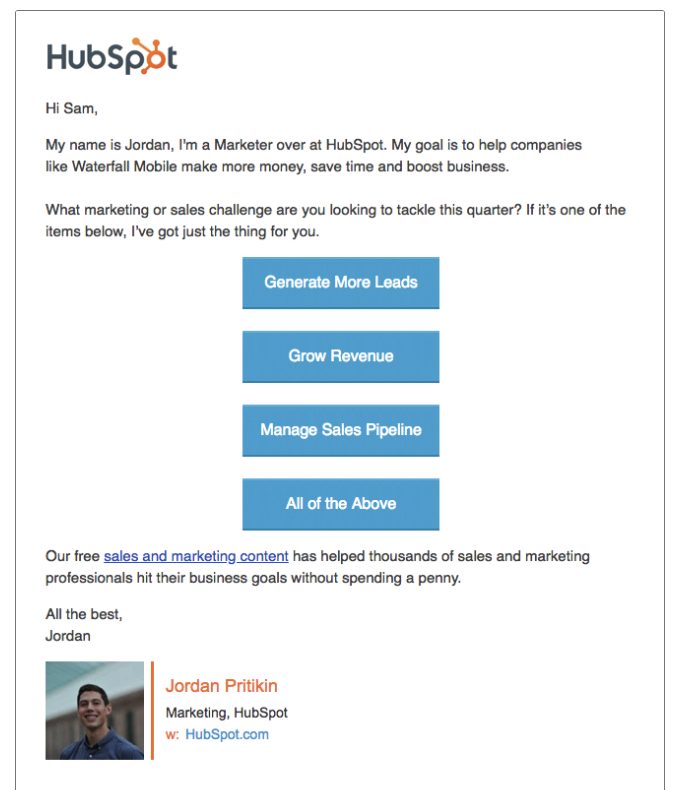
The SDR would be responsible for approaching and nurturing new leads and may be supported by the content marketer to design effective email campaigns.
Successfully qualified leads will be handed-off to the AE (along with any information to deliver a seamless experience for the prospect) when a demo is booked.
The content marketer would continue to support by designing crucial sales collateral such as pitch desks, working with the AE to refine this content based on prospect interactions.
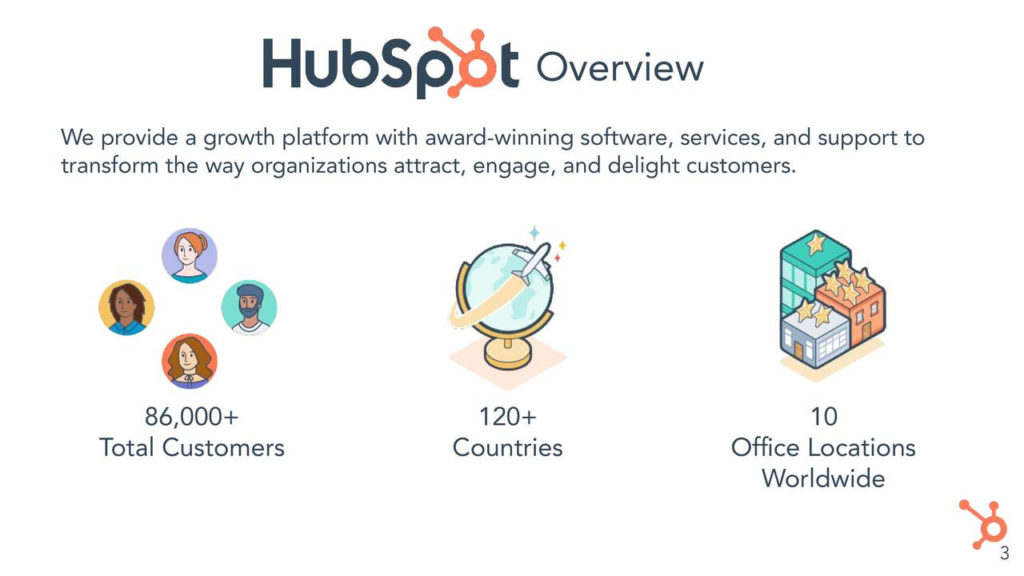
Use a combination of internal processes and external software solutions (like Demandbase) to stimulate sales and marketing alignment and drive an integrated ABM campaign.
3. How GumGum uses personalized content to close enterprise B2B companies
Account-based marketing plays should personalize content, but personalization must go further than simply using the prospect’s name in email outreach.
To make an impact, personalized content must feel unique, catering to the prospect’s specific interests and demonstrating thoughtfulness that creates a lasting impression.
Take contextual intelligence platform GumGum, whose personalized content drives results.
For GumGum, account-based marketing meant identifying and resonating with key stakeholders at highly-targeted accounts.
In this case, John Legere, then-CEO of T-Mobile:
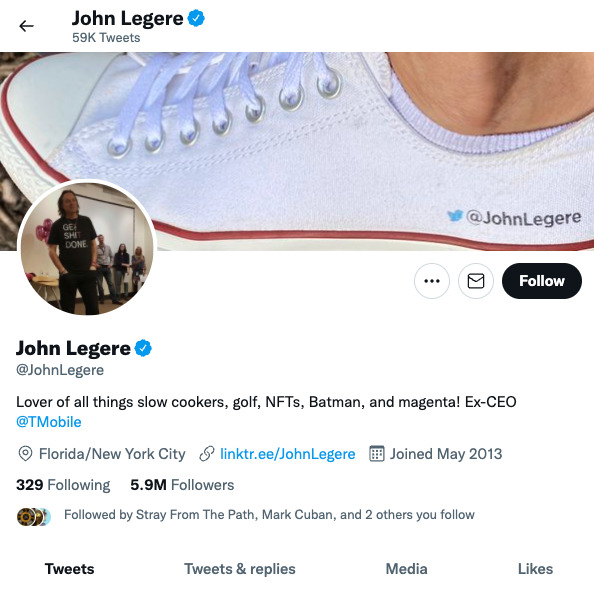
Legere is an active Twitter user and outspoken Batman-enthusiast, something GumGum could use to their advantage.
Going beyond the customized t-shirts and phone cases other ABM-led companies have tried, GumGum commissioned a custom comic book with Legere as T-Man, the protagonist dressed in Batman-inspired attire.

This bold account-based marketing tactic helped land GumGum a contract with T-Mobile, and a fair bit of social media exposure at the same time.

When personalizing content, go beyond using mail merge to include the prospect and company name. Cater your message directly to each individual.
Take this hyper-personalized email from PersistIQ, a marketing automation tool.
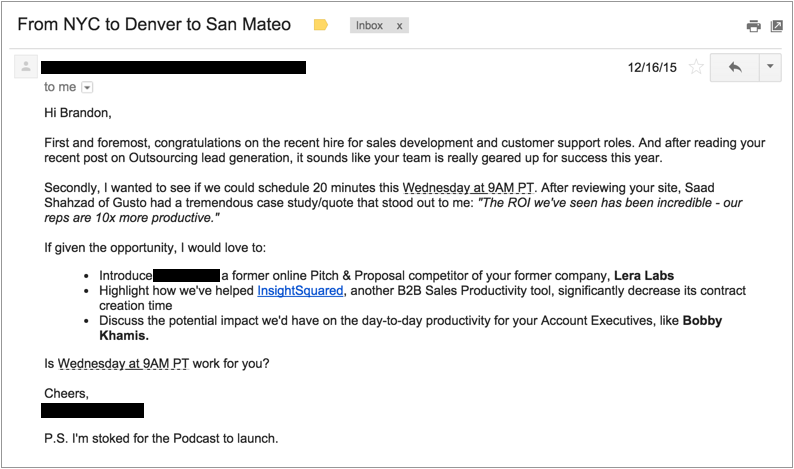
This email demonstrates that the sender has thoroughly researched their prospect, using publicly available information to open a conversation, such as the prospect’s recent hires.
Follow GumGum’s lead when it comes to designing personalized content. Trawl media appearances and social profiles to understand a prospect’s strongest interests, and design your communications around that.
4. How Auth0’s structured rollout of its ABM programs delivered $3M+ in pipeline
Account-based marketing is a methodology, not a tactic. It’s much more like adopting an inbound marketing model than it is deciding to run PPC ads.
A “quick pivot” to ABM isn’t realistic. A more structured, systematic approach to adoption is more likely to see success.
When Auth0, now part of Okta, began to implement ABM, they knew that a methodical rollout would achieve the most sustainable results, and allow their team to adapt to learnings on the fly and before deploying changes across the entire organization.
Auth0 brought on board 6sense, an account engagement platform designed specifically for ABM initiatives. They designed a pilot initiative starting with two teams: SDRs and MDRs, both targeting AMER and EMEA accounts.
6sense provides insights into target account engagement with ABM initiatives such as media campaigns. Auth0 used this to build an additional $3 million in sales pipeline in the first six weeks of the pilot.
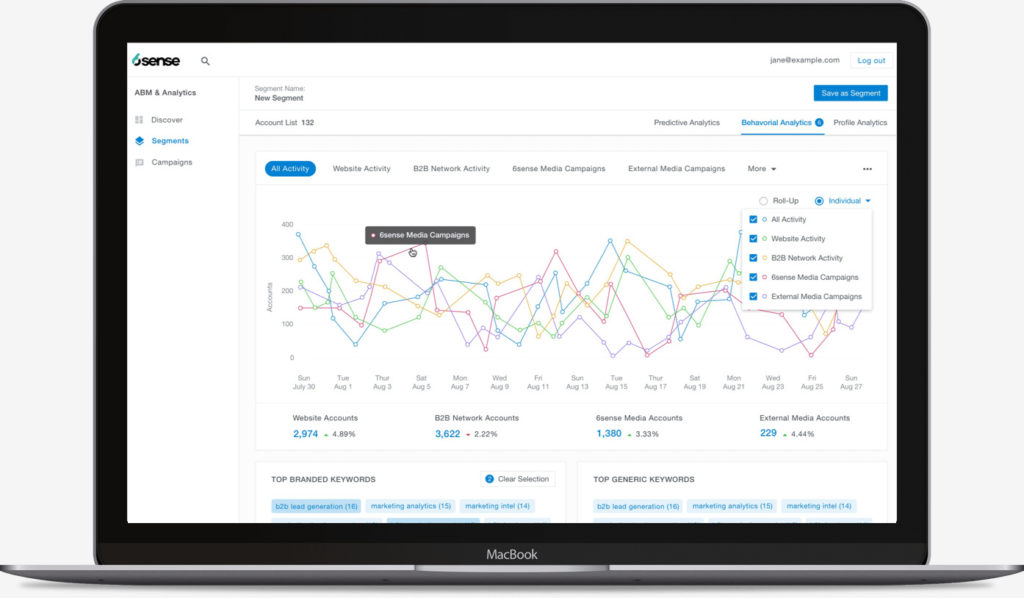
Ed Cho, ABM Program Specialist at Auth0 describes how vital this data is to make informed decisions on account targeting:
Before, it was more of a spray-and-pray method, where we didn’t know what accounts to focus on but now we’re hearing confirmation from the sales team that the 6sense data is key, and that’s what is working for them. [via 6sense]
After this initial pilot, Auth0’s account-based marketing strategy was rolled out to the global SDR and MDR networks, as well as the company’s demand generation marketing team. Shortly after, a selection of AEs were onboarded, sourcing 16 new account opportunities in just six more weeks.
Moving toward account-based marketing should be a gradual approach, particularly for large companies that have sizable teams with established methodologies.
Consider segmenting your ABM rollout by territory rather than by role. For example, you might trial the account-based marketing efforts with your West Coast sales and marketing teams, adjusting based on these learnings before expanding further east.
Though a systemic rollout based on roles (e.g., starting with SDRs then incorporating AEs) might be a less complicated approach from an internal perspective, it’s important that the experience is consistent from the customer’s point of view.
A highly-personalized SDR cadence that converts and hands prospects off to a non-account-specific, generic AE sequence may leave customers feeling like your company is only interested in generating leads.
5. How DocuSign tripled their homepage conversions with dynamic content
Though account-based marketing is typically spliced with outbound sales approaches, it can serve as an effective partner for inbound-focused teams, if ABM lead generation efforts make effective use of dynamic content.
DocuSign built its lead generation strategy to suit an account-based marketing approach.
Like Dialpad, DocuSign leveraged Demandbase’s suite of account intelligence tools to design a powerful ABM strategy and attract leads that met highly specific criteria.
In this earlier campaign, DocuSign created a targeted digital advertising campaign using Demandbase’s Company-Targeted Advertising tool
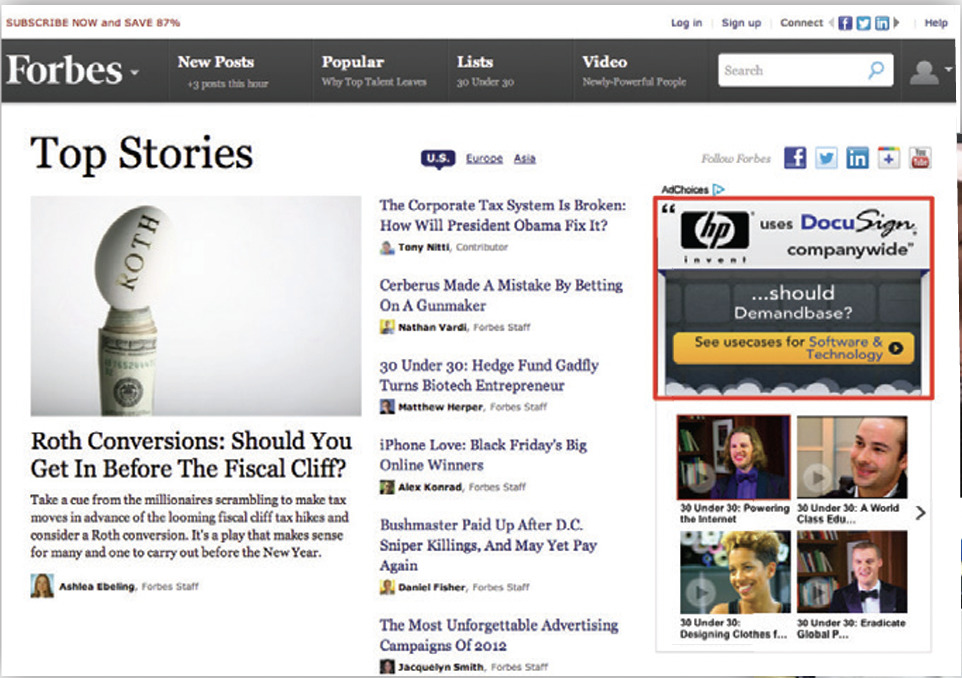
While this was an effective tactic for attracting appropriate enterprise-level accounts, DocuSign noticed that visitors were bouncing before viewing the content that was both most valuable and most likely to generate leads for their ABM sales team.
To improve on-page interaction, DocuSign incorporated an element of personalization, designing a series of industry-targeted homepages with dynamic content such as customer testimonials.
These initiatives, coupled with an optimized free trial form, delivered impressive results for DocuSign’s account-based marketing team:
- 1 million impressions delivered;
- 59% of targeted companies landed on the DocuSign site;
- 22% sales pipeline growth for targeted industries;
- Tripled CTR on the homepage using industry-relevant CTAs.
When combining account-based marketing with an inbound method, use dynamic content to deliver an industry-relevant experience that is specific to the account you’re targeting.
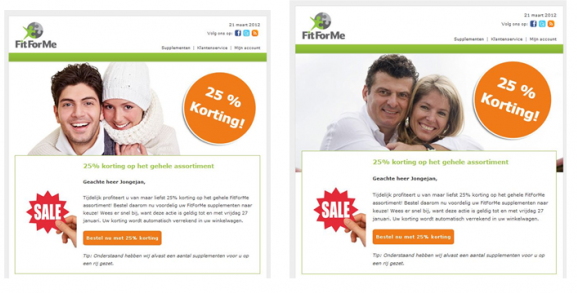
Use demographic data to trigger dynamic content, like age-based photography.
Personalize homepage hero copy and imagery based on your target account’s current growth stage, like this homepage that features dynamic content modules.
For example, companies that exhibit growth signals as defined by BizBase’s ABM team will see the growth-focused content set when visiting their website.
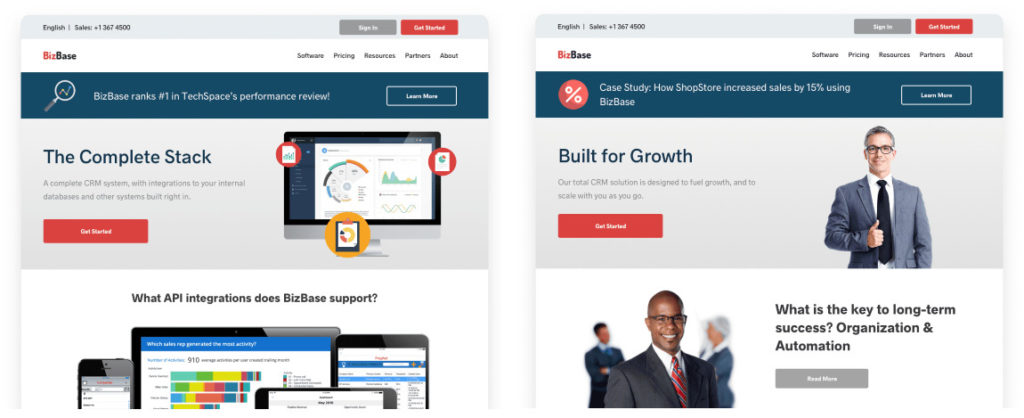
Use dynamic content to speak directly to audience needs and increase on-site conversion.
6. How Caroo reached 85% of target accounts after a rebrand
Account-based marketing can be a powerful growth lever for organizations changing tack and pursuing a new market segment (or completely transforming their service offering).
In the summer of 2020, when it was clear that a return to the office was off the cards for now, Caroo pivoted their in-office snack platform to become a corporate gifting platform designed specifically for remote teams.
While Caroo’s inbound approach was delivering some revenue, Director of Account-Based Marketing Torrey Dye knew that demand for this relatively new product segment would need to be driven by the ABM team to capitalize on the sudden market change and recover the potential revenue loss as their previous model no longer served a market need.
Like Auth0, Caroo took an incremental approach:
“When you are launching ABM from nothing, you have to be methodical to make sure you don’t miss anything. I planned out a four-phase approach to get everything up and running.” – Torrey Dye, Director of Account-Based Marketing [via Terminus]
In the third phase (the first two involved planning, documentation, and gaining stakeholder buy-in), Caroo built a series of unique microsites that would be used to target specific verticals and product use cases.
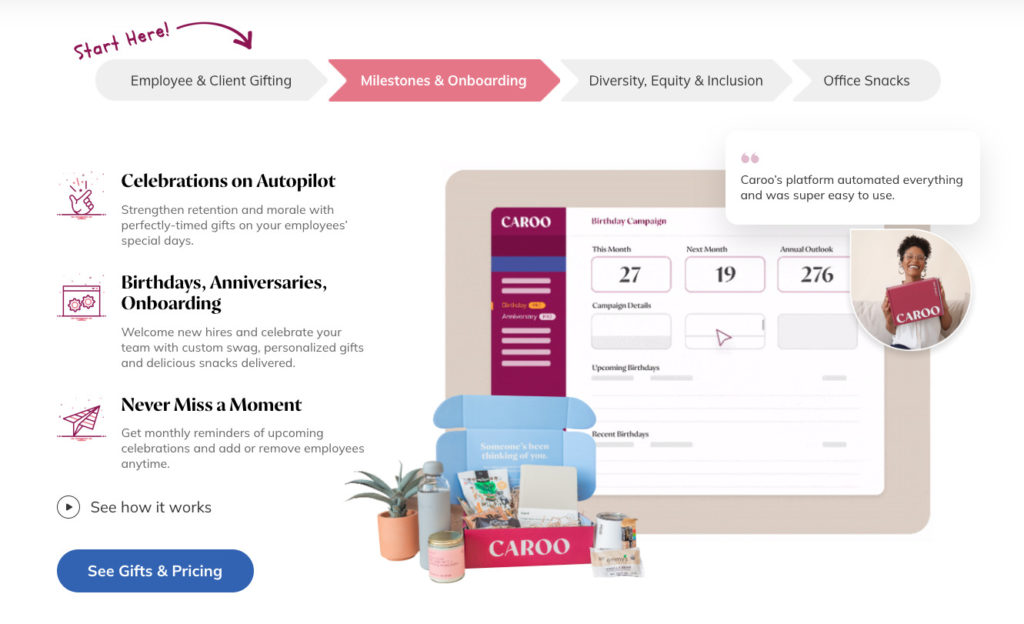
This approach was valuable for supporting the company’s existing inbound approach (the team engaged more than 85% of their target accounts), though Dye credits sales team visibility as a key driver behind Caroo’s ABM success:
“If I could recommend anything to someone who is trying to implement ABM, it would be to create a live dashboard in your CRM for your sales reps. Our sales team uses ours religiously.” – Dye
When launching a new product, account-based marketing has two strong cards to play.
It can be used to attract new accounts, but it’s also a powerful way to upsell and increase revenue from existing accounts.
First, determine which existing accounts your team can sell into. Upselling existing customers is easier and more cost-effective than hunting down new ones, so this is the obvious place to start.
For example, Pipedrive, a sales CRM, launched a new add-on product called Campaigns.

Let’s say the platform’s marketing and sales teams decided to take an ABM approach.
Before targeting new customers for this product, Pipedrive would identify which of its existing accounts could benefit from an email marketing campaign platform.
They might identify from their owned data those who are currently integrating their Pipedrive account with email clients like lemlist, Klenty, or PersistIQ.
When using ABM to support a new product launch or rebrand, take a similar approach to Caroo:
- Design a phased approach that focuses heavily on planning and documentation;
- Use personalized content to target specific verticals;
- Make sure sales reps have visibility over all marketing activities.
7. How Workfront leveraged ZoomInfo’s B2B database to grow sales pipeline 90% YoY
Account-based marketing and selling approaches must be highly personalized, but personalization can only work if you have the right data.
Take Workfront, an enterprise-facing online work management software, now part of the Adobe Experience Cloud.
Before partnering with ZoomInfo, a revenue intelligence platform, Workfront’s biggest hurdle to an effective ABM program was an outdated, error-filled database.
“My teams were losing way too much time on calling the wrong contacts. We had a data problem. The accuracy of our direct-dial phone numbers was dwindling fast, and my team complained about not having anyone to call. Something had to give.” – Justin Hiatt, Vice President of Digital Sales at Workfront [via ZoomInfo]
In the original case study, ZoomInfo used its prospecting and account-intelligence data to improve Workfront’s contact coverage and data quality across its target accounts.
“We more than doubled our activity; and our efficiency skyrocketed. Since then, we’ve grown our pipeline over 90% per year.” – Hiatt
When designing your own ABM outreach sequence, use account intelligence and data enrichment tools like this to improve your ability to target key decision-makers.
For example, when conducting account research on LinkedIn, ZoomInfo’s Chrome extension can pull additional information on KDMs you’ve identified, such as their email, phone, and account demographics like company size.
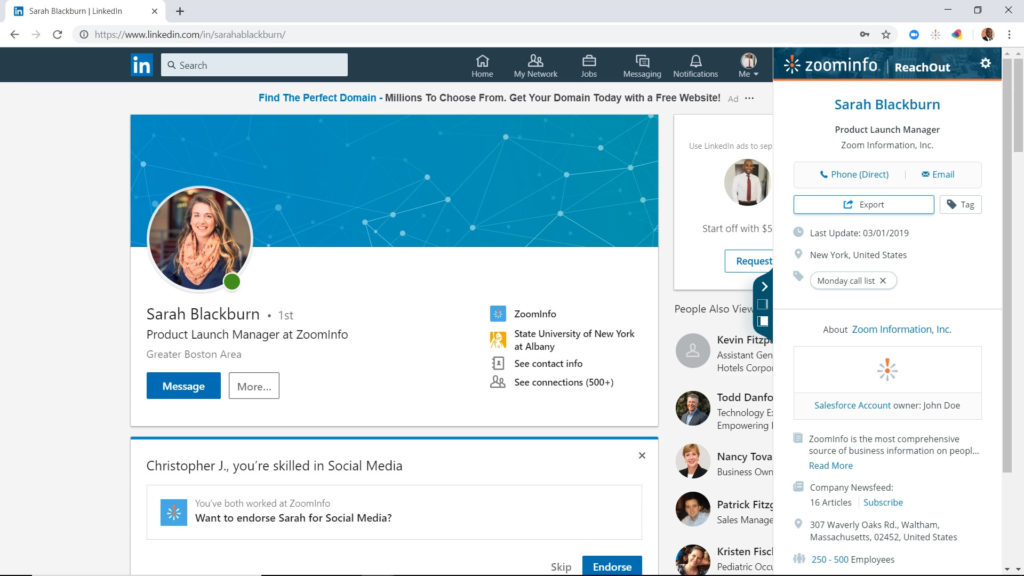
If you were targeting ZoomInfo as a key account, then you could use the data to send a custom email to their product launch manager. In your email, you could include a CTA that links to a landing page built for mid-market accounts.
Use data enrichment tools to gather detailed information on prospects before trying to design personalized content or outreach messaging.
How should you measure account-based marketing?
Measure ABM using the movement and commercial value of target accounts, not just the volume of leads generated.
Useful ABM metrics include:
- target-account engagement;
- buying-group engagement;
- accounts progressing between buying stages;
- opportunities created from target accounts;
- target-account pipeline;
- closed-won revenue;
- win rate and deal velocity;
- expansion revenue from existing accounts.
This matters because measurement has not always kept pace with ABM adoption. 6sense’s research found that many account-based teams still rely on traditional lead-based metrics such as MQLs even when their strategy is built around accounts and buying groups.
Its 2025 measurement research also found that organizations with lower-value offerings were less likely to track advanced ABM metrics such as target-account opportunities, pipeline, and closed-won deals.
If the objective is to create revenue from a defined account list, the measurement system should show whether those accounts are progressing toward revenue.
What can you learn from these account-based marketing examples?
The strongest ABM programs combine selective account targeting, sales-marketing alignment, relevant personalization, multi-channel engagement, reliable account data, and revenue-focused measurement.
Without a comprehensive understanding of account-based marketing principles, strategies, and tactics, a switch to ABM will probably fail.
While many revenue leaders disagree on the true definition of ABM, take inspiration from examples like those we’ve discussed to build your own strategy and drive revenue growth.
To start landing bigger accounts:
- Use a multi-channel approach to improve ABM efficacy;
- Unite sales and marketing using a single funnel;
- Take personalization beyond using a prospect’s name in content;
- Design a structured, methodical plan to roll out ABM;
- Use dynamic content to support an inbound marketing strategy;
- When launching a new product, use ABM to sell into existing accounts first;
- Leverage data enrichment and intelligence tools to reach the right person every time.
- Measure account progression, pipeline, opportunities, and revenue rather than relying only on lead volume.
Frequently asked questions about account-based marketing
What is account-based marketing?
Account-based marketing is a B2B strategy that coordinates marketing and sales around a defined set of high-value target accounts and the buying groups within them.
What are the main types of account-based marketing?
The three common ABM models are one-to-one, one-to-few, and one-to-many, depending on how narrowly accounts are grouped and how personalized the activity is.
Is account-based marketing only for enterprise companies?
No. ABM can work for smaller B2B companies when the potential account value justifies the cost and effort required to target and personalize the campaign.
How do you choose accounts for ABM?
Prioritize accounts based on fit, potential value, strategic importance, buying signals, existing engagement, and the likelihood that your product can solve a meaningful problem for them.
What role does intent data play in ABM?
Intent data helps identify target accounts that are actively researching relevant topics or solutions so sales and marketing can prioritize accounts showing stronger buying signals.
How is ABM different from lead generation?
Lead generation focuses on attracting individual prospects, while ABM starts with selected accounts and coordinates marketing and sales activity around the wider buying group.
How should you measure account-based marketing?
Measure ABM using account engagement, buying-group activity, account progression, opportunities, pipeline, closed-won revenue, and expansion.
Does ABM require personalization?
Yes, but the level of personalization depends on the ABM model. One-to-one programs typically use deeper account-specific personalization, while one-to-many programs personalize around shared account characteristics or needs.
Improve your account-based marketing
Strong ABM combines account selection, buying signals, personalized activation, sales alignment, and measurement around pipeline and revenue.
Build an ABM program from the ground up: CXL’s Account-Based Marketing course covers target-account selection, activation playbooks, personalization, sales alignment, and measuring ABM impact.
Align sales and marketing around the same revenue goals: The B2B Sales-Marketing Alignment course covers shared KPIs, pipeline quality, account definitions, dashboards, and activation between sales and marketing.
Measure whether your ABM program actually works: The Fix ABM Measurement course covers account progression, stage-based attribution, conversion modeling, dashboards, and proving ABM impact to stakeholders.
Related Posts
-

Account-based marketing plays a critical role in the growth of many businesses across a variety…
-

ABM works - when it's done right. Taking shortcuts can cost you time and money.…
-

Choosing the right account-based marketing software can be a messy process. Some ABM software is…
-

Account-based marketing (ABM) accounted for 79% of all sales opportunities in 2020. And yet, no…